The Double
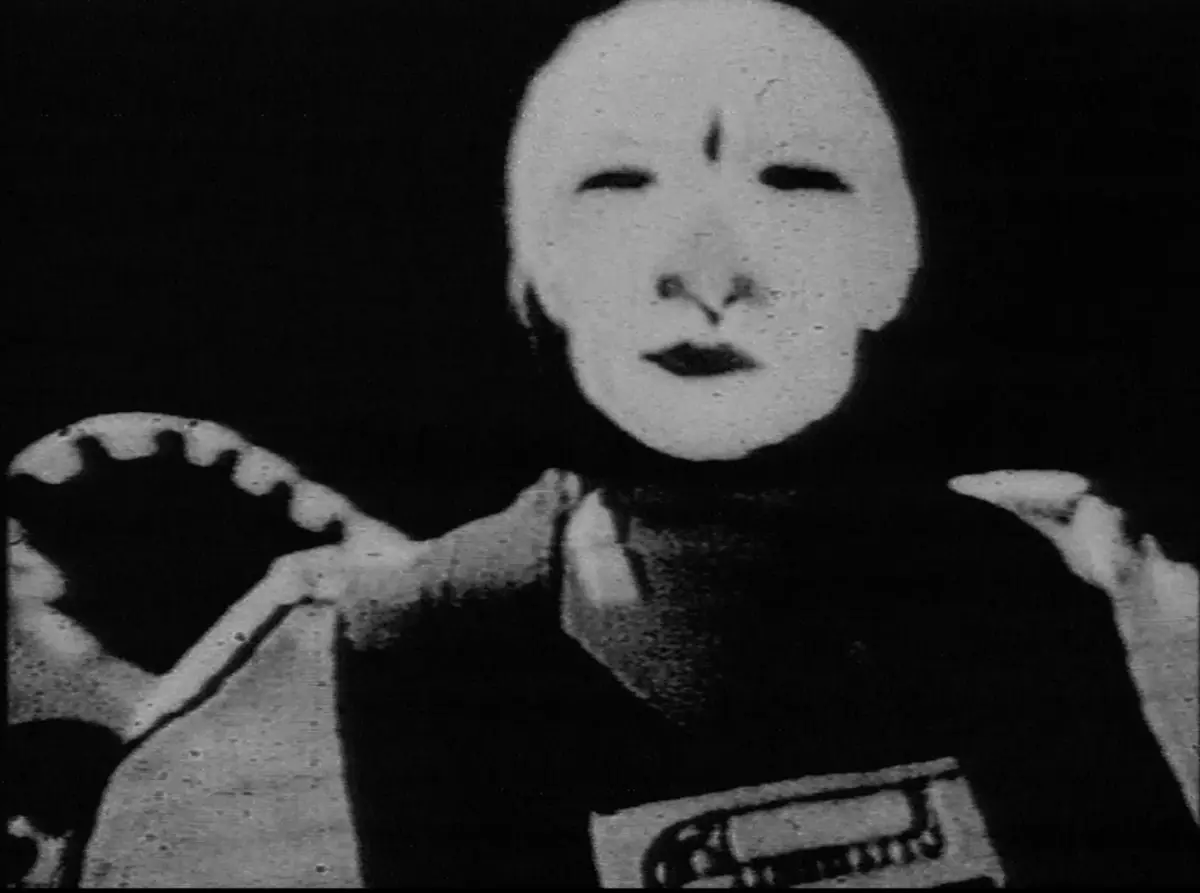
Thursday, 27 August at 2 PM | AaltoSiilo | Free access / 7+ Sunday, 30 August at 2:30 PM | Valve Hall | Free access / 7+ 1. Pusk: V plenu u invalidov (Captivated by the Handicapped). Directed by Igor Levinsky and Piotr Totchilin. Music by Laibach. 1993. 2. Iskusstvennoye dykhaniye: Vanya (Revolyutsiya) (Vanya (Revolution)). 1992. 3. Microsurgery: Amalgama (Amalgam). Directed by Maxim Vasilenko. 1989. 4. Vadim Koshkin & Nikolai Shiroky: Parazity mozga (Brain Parasites). 1993. 5. Notchnoi Prospekt: Abyss. Directed by Konstantin Bozhiev. 1989/1993. 6. Elena Nabel: Je voudrais me taire. 1992. 7. Igor Verichev (New Composers): Vy dolzhny vsyo zabyt (You Must Forget Everything). Directed by Sergey Shutov. 1992. 8. Velvet & Velvet Dolls: Skazka (Fairytale). 1992. 9. Laboratoriya merzloty: Svet v kontse tunnelya Light at the End of the Tunnel. Fragment from a pirate cable tv show, directed by Kirill Preobrazhensky and Alexey Belyayev. 1991. 10. Currents of Death: Fucking Electrisity. Directed by Vadim Koshkin. 1993. 11. Stuk bambuka v XI chasov: Snezhnyi myod (Snow Honey). 1992. All videos directed by the artists, except where noted. Compilation and introduction: Anton Nikkilä and Mika Taanila, 1993 Duration: 50 minutes
Russian industrial and low-tech music videos
Is Russia and its culture a hopeless case, condemned to repeat the same horrors through the pendulum logic of history? Watching The Double, one is tempted to ask.
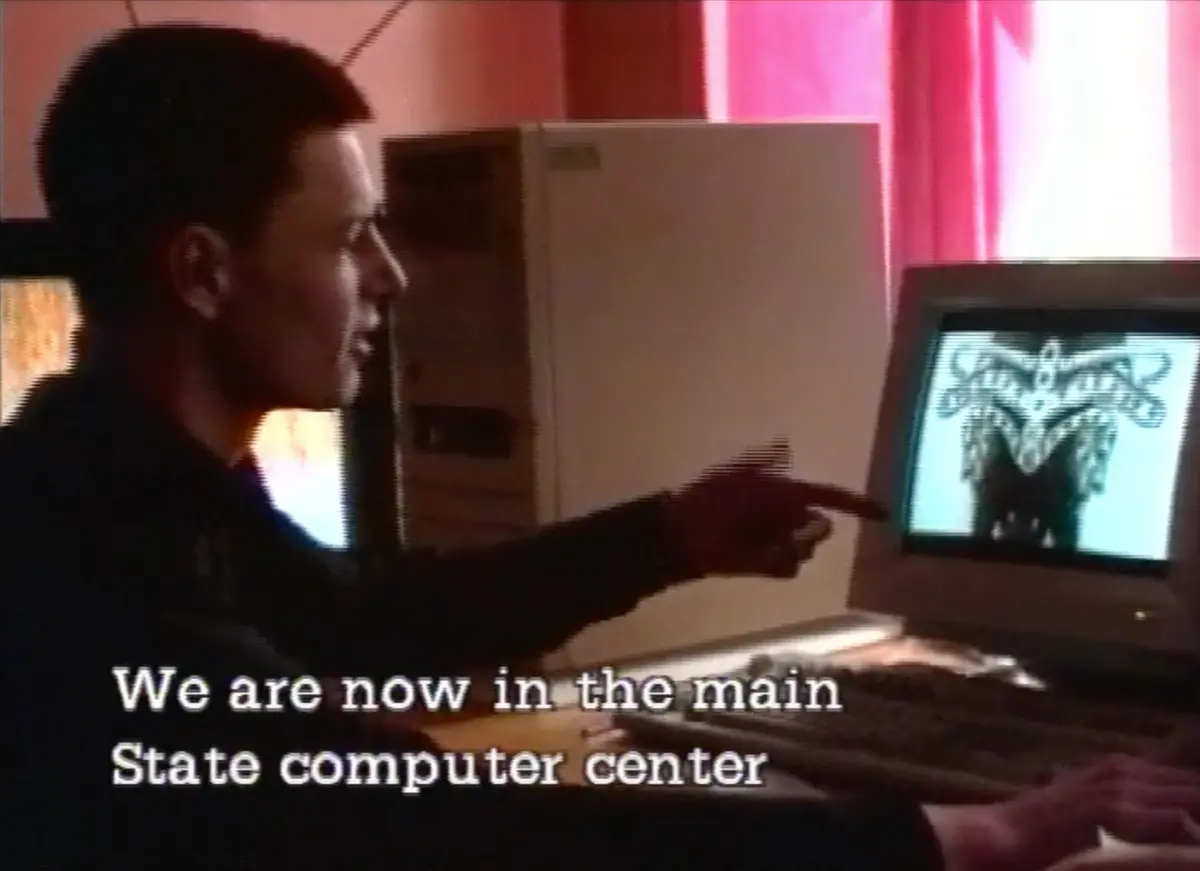
The film is a compilation of music videos, interviews with their makers, and television commercials from the last time Russia's centralized cultural control briefly loosened: the perestroika era, at the turn of the 1980s and 1990s. During those years, underground filmmakers and industrial musicians unexpectedly received support from above — including from the Soviet state's own "Central Television" channels, TV1 and TV2. In 1993, Mika Taanila and I obtained most of the video copies featured in The Double from their archives.
The spirit of the period was shaped by the collapse of Soviet heavy industry and the privatization of its ruins — a transformation reflected in both the music videos and the television advertisements of the time. In the original vision of the Soviet founders, heavy industry, concentrated around the mining regions of Donbas, formed the backbone of Soviet civilization and was primarily producing weapons. Several of the videos included in The Double lightly carnivalize the barracks mentality of the Soviet system.
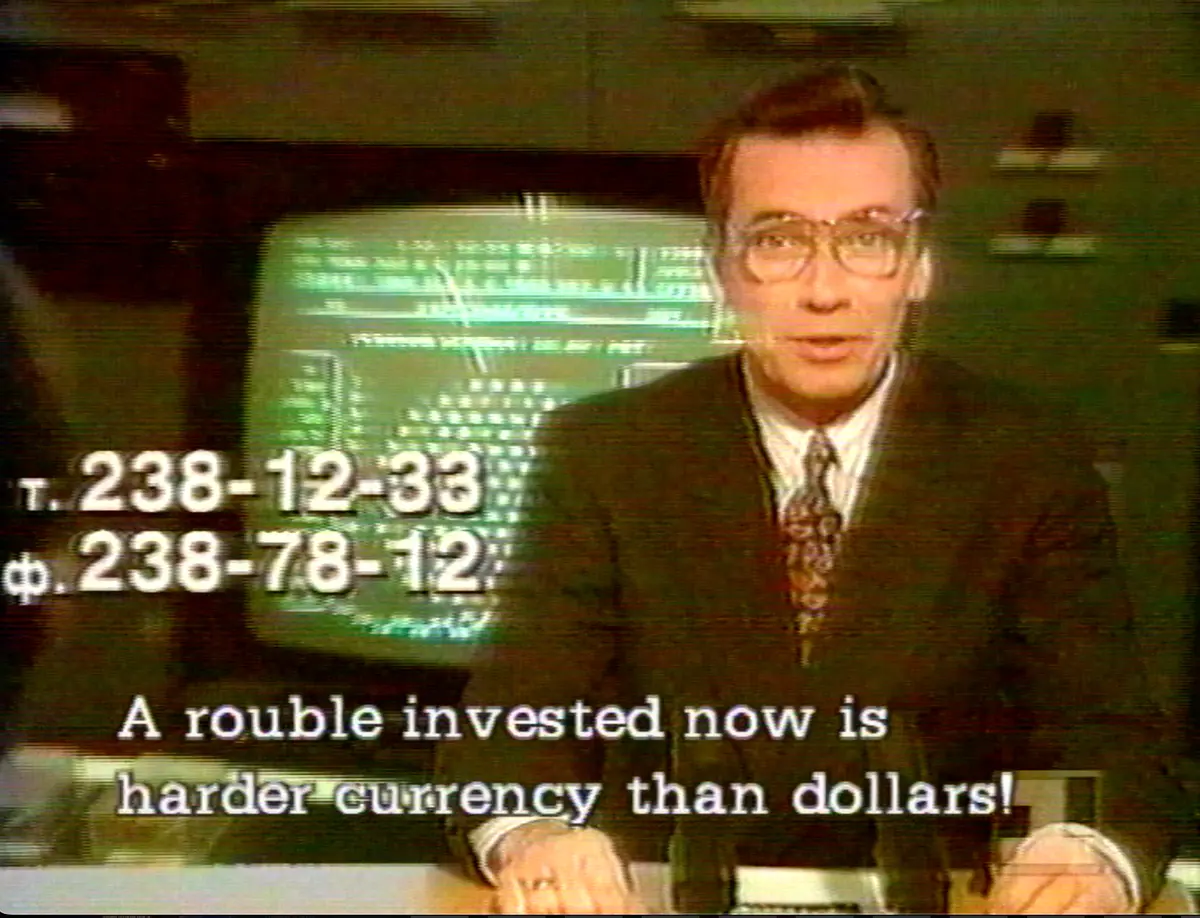
The wild landscape of early-1990s Russian television also featured massively popular mentalists demonstrating their powers of mass hypnosis, alongside advertisements for tear-gas weapons marketed to citizens navigating an increasingly violent everyday life.
A decade later, Russia began to look more orderly, and many in the West accepted that image at face value. Today the perspective has shifted again. Looking back, it is possible to see how the interviews and videos of The Doublealready disclose some of the conditions that would later contribute to the decay of contemporary Russian culture and the rise of a fascist police state: a willingness to remain silent, and a tendency to regard infantilized passivity as a normal condition — if not an ideal.
The question of "memory politics", the controlling of history through distortion and forgetting, surfaces ambiguously in a techno video by New Composers, where an Orwellian male voice commands over footage of a military parade: "You must forget everything."Yet not everything was forgotten after the collapse of the Soviet Union. Military parades on Red Square resumed in 1995 after a four-year hiatus, and the nuclear missiles returned there in 2008.
- Anton Nikkilä, 22.5.2026